| Name (West) | Name (Japan) | Onomatology (West) | Onomatology (JP) | Catchphrase |
| Diva | アイーダ, Aīda | To be honest, I don’t know. It’s probably a reference to how stylish she is, but… | …her JP name is a more substantial reference to a Broadway musical called Aida. It’s set in ancient Egypt. This is pertinent to Diva because her default outfit is an Egyptian top. Diva is one of the few characters alongside Ankha who references Egypt | “ya know” |
| Dizzy | ヒュージ, Hyūji | Reference to how he’s a little dopey as a villager with the Lazy personality, and how childish his initial décor is; kids like to spin around in circles to make themselves dizzy. I know I did it once, to see if I could, like, transcend this plane of existence. I didn’t 😦 | It means “huge”, referencing the size of adult elephants | “woo-oo” |
| Dom | ちゃちゃまる, Chachamaru | Possible reference to how this jock villager dominates sports and training | Chacha means “disruption” in Japanese, and -maru is a male suffix for Japanese first names, so he’s a disruptive boy? | “indeedaroo” |
| Drago | タツオ, Tatsuo | Reference to his draconic appearance | His name contains some characters that can be read as “dragon” in Japanese | “burrrn” |
| Drake | フォアグラ, Foagura | Reference to how male ducks are called “drakes” | Another food reference, this time to foie gras, which is… made from duck liver. Dark | “quacko” |
| Elmer | サブレ, Sabure | Reference to Elmer’s Glue. Dark | Reference to the French cookie sablé. There are some villagers whose Japanese names are references to French desserts, probably because puns are adored in Japanese culture | “tenderfoot” |
| Elvis | キング, Kingu | Reference to Elvis Presley, known as “The King”, as well as how lions are referred to as the kings of the jungle, even though they live on the savannah | Reference to the latter fact listed to the left | “unh hunh” |
| Eugene | ロッキー, Rokkī | Reference to eucalyptus leaves that koalas eat | The music references continue with this koala’s rock and roll styling | “yeah buddy” |
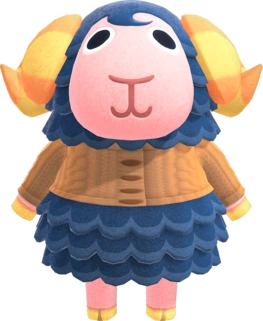
| Eunice | モヘア, Mohea | Reference to the word “ewe” for female sheep | Reference to “mohair”, a type of fabric | “lambchop” |

 Video Game Journals